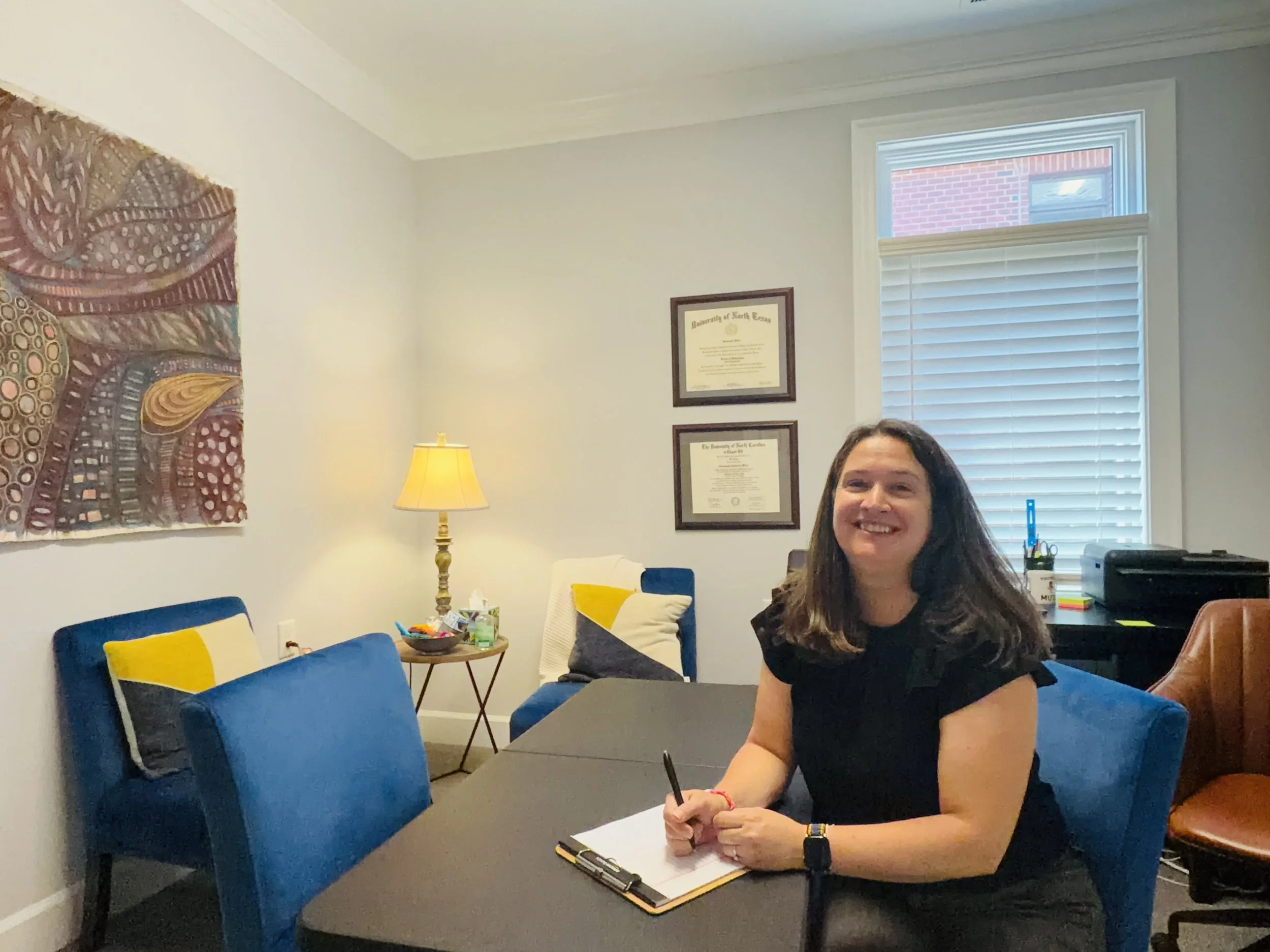
About My Practice

I conduct compassionate, comprehensive psychological assessments with children (ages 6+), adolescents, and adults. I started this practice to improve the quality of life for Triangle families and that of future generations. I do this by:

  • Giving parents the tools they need to understand why their child acts or thinks the way they do, find the next steps for treatment, and advocate for their child’s needs in school and in the community,

  • Collaborating with therapists and other treating professionals to heighten or quicken the success of therapy, and

  • Getting to the root of the problem so that medical professionals can determine the best course of treatment.

About My Process

Our first interaction is a phone call to determine if I am a good fit for your family. You can schedule this Connections Call by clicking on the button. If you decide to start an assessment with me, we will complete it in the following process:

  1. Initial Meeting. The first meeting can be held in my office or virtually, if preferred. For children, this meeting is parents-only so that we can speak openly and confidentially. Adults usually attend alone, although they are welcome to bring a loved one with them if they would like. Please plan 2 hours for the initial meeting. In this meeting we will develop the “Assessment Questions,” the questions you have about yourself/your child that we will answer through the assessment. Click here to see a list of common guiding questions. At this meeting I also explain how I work, answer questions you have about the process, and ask questions to understand the context of you or your child’s struggles.

  2. Testing sessions. Most assessments are completed in three to five 2-hour testing sessions. The testing sessions are held in my office and consist of interactive activities (like solving “brain-teaser” type problems or memorizing words), questionnaires, and open-ended tasks (like telling stories or finishing sentences). Click here to learn more about what the testing sessions are like.

  3. Parent Check-Ins. I meet alone with parent(s) for the first and last 5-10 minutes of every child’s testing session. I also allow parents to silently observe and be “a fly on the wall” during their child’s testing sessions. There are times this does not work out (e.g., it is too distracting for the child, or the parent needs to be on their phone), but, if possible, it’s a great opportunity that allows parents to understand where the test data comes and offer their insights and observations. If one parent is unable to attend these check-ins, I like to schedule a phone call or virtual meeting midway through the process to discuss what we’re learning.

  4. Scoring and interpreting test results. You are not present for this part of the assessment process, but rest assured that after you leave a testing session, I am hard at work scoring and interpreting the test results.

  5. (Optional) Family meeting. Once the testing is complete, if it makes sense, I love to invite the child’s family to join him or her in a family session. We do an activity together that helps me understand the family as a whole and the child’s role within it. I get helpful information watching parents and siblings interact in the activity. I use what we’ve learned from the assessment up to that point to guide parents in trying a new approach with their child in this session.

  6. Discussion meeting. Within two weeks of completing testing, I meet with you to answer the Assessment Questions. This meeting lasts 2 hours and can be held in my office or virtually, if preferred. In this meeting we review the test results and how to use this information to help you or your child going forward.

  7. (Optional) Fable. If appropriate, I write and share a fable with your child that incorporates what we learned about them through the process and helps them feel understood. We meet to read the fable, talk about what we learned and how things may change moving forward, and say goodbye.

  8. Written letter or report. Within 2-8 weeks of the discussion meeting, I finalize the written assessment report and share it with you. The report has all of the important findings we discussed in the feedback meeting, as well as background information, full test scores, and personalized recommendations. With your written permission, I share the report and consult with other professionals working with you or your child (i.e., doctors, therapists, teachers).

  9. (Optional) Follow up. We can meet 3 months after the assessment is complete to talk about the process, answer any questions about the report, and follow up on recommendations. Of course, families can reach out to me with questions they have at any point.

Questions? Check out the FAQs.

See what other professionals are saying

“By the way, your report on E. was outstanding!!!! This is the best psychological evaluation I have seen and I loved some of your recommendations.”

-E.’s Pediatrician

“I thought it was an excellent report! I really liked how you organized findings around a series of questions. You also have a gift for communicating findings in a non-jargon way that teens and families can make sense of. Most of us fall into psychology-speak pretty rapidly! I know this report will be helpful to him and his parents over time. Thanks for your good work!”

-S.’s Therapist

Get started with Dr. Scearce today.